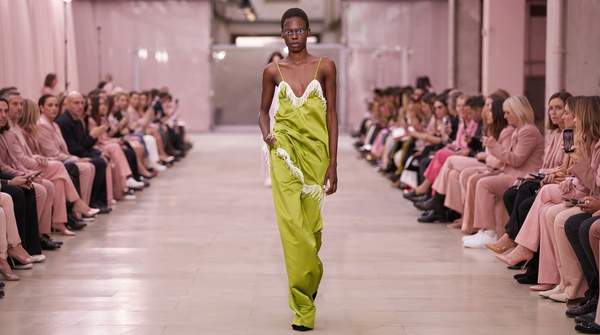
Fashion presentation has quietly become one of the industry's most strategic decisions. Where a brand once simply sent models down a catwalk, it now chooses among at least five distinct formats — the traditional runway, the presentation or salon show, the experiential immersion, the digital-first showcase, and the socially-driven narrative — and each choice signals something precise about audience reach, narrative control, and budget. I find this the most revealing lens for reading any show: the format is the message. Here is how the options compare, and what each one tells you about the brand behind it.
Beyond the Catwalk: The Evolution of Fashion Presentation
The pressure driving this diversification is real. As industry commentary from Glam Observer notes, brands today "find themselves confronted with high pressure to compete, sustain, and leave a lasting impression," with shows functioning as marketing spectacles designed to impress current and potential customers, generate press coverage, and give buyers a first look at what they will order for retail. That commercial stakes-raising explains why a single format no longer fits all.
The salon show, in fact, predates the runway entirely. Fashion houses hosted salon presentations before staged shows emerged in the early 20th century, and the first fashion week — New York's 1943 "Press Week" — came later still. What we call tradition is younger than we assume, and the current proliferation of formats is less a rupture than a return to pluralism. The question for any brand is no longer whether to stage a show, but which kind of relationship with its audience it wants to build.
Traditional Runway: Spectacle and Prestige
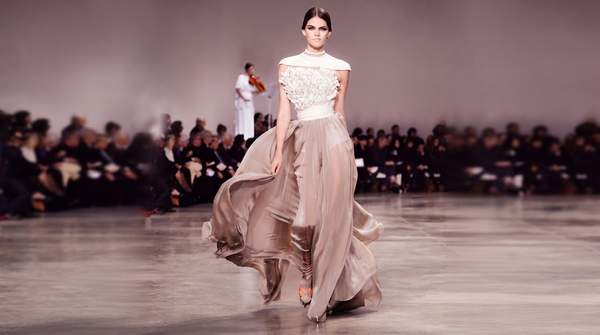
Even the classic runway splits into two experiences. Production specialists at Advanced Productions describe ground-level runways as fostering immediacy — models walk close to the crowd, reactions build palpable energy, and everyone enjoys a similar, unobstructed view with no physical barrier between models and audience. It is a proven, reliable format that works for everything from private presentations to large public events.
Elevated runways make a different statement. The added height, Advanced Productions explains, enhances visual drama and can transform a show into a performance-like event, giving the designer more creative freedom. Some designers now hybridize: opening at ground level to build intimacy, then moving to a raised platform for a dramatic finale. The limitation of both is brevity — garments pass by once, at a distance, and the detail is gone in seconds. Prestige and spectacle come at the cost of close inspection.
Intimacy and Detail: The Presentation and Salon Show
The presentation format answers the runway's weaknesses directly. Attendees can examine clothing up close, touch fabrics, and appreciate intricate details that Glam Observer notes "may be overlooked on the runway." Designers gain flexibility in venue, set design, and format, and the whole exercise is more budget-friendly across venue costs, production expenses, and staffing — a genuinely economical option compared to a full show.
The salon show sits deliberately between the two poles, a format designers have explored in recent years to balance the presentation's intimacy with the show's theatricality. Its strategic logic is exclusivity: as fashion writer Samantha Dwyer observes, whichever format a designer chooses, there will be "swarms of people knocking down the door to be one of the few to see the new collection firsthand." A salon show converts that scarcity into intimacy — fewer guests, closer proximity, and a conversation rather than a broadcast.
Experiential Immersion: Crafting a Brand World
Some brands go further and build an entire world around the clothes. Ferrari Style's Spring/Summer 2027 show, staged in a downtown New York art gallery, is a case in point: the deliberate engagement with "other disciplines of making driven by the same pursuit of excellence and innovation," as the show's coverage describes Creative Director Rocco Iannone's vision, positions the collection within a broader cultural narrative — a New York "forever crystallised in the collective imagination during the decade of excess."
The strategic payoff is brand-building rather than garment-selling. An immersion signals that the brand belongs to popular culture and pure aspiration at once, borrowing the prestige of adjacent disciplines — art, in Ferrari's case — to elevate garments into a universe. The trade-off is cost and focus: the environment can overshadow the clothes, and the audience remains physically limited to those in the room. You buy memorability, not reach.
Digital-First Showcases: Global Reach and Creative Control
Digital is not one format but a category. When fashion weeks went digital, the range of approaches was striking. WWD's survey of the season found Marine Serre's short film "Amor Fati" powerful for its complete scenario that still showed the collection; Victoria Beckham presenting digitally in an art gallery, with sculpture and paintings matched to the clothes in slow motion; and Cecilie Bahnsen's dreamy short film shot in windswept landscapes.
The most experimental pushed further. WWD highlighted GCDS presenting its collection inside a video game room — "a completely new technological and revolutionary way" — while Miuccia Prada and Raf Simons debuted with "Dialogue," a video paired with the two designers answering questions gathered from the brand's social networks. The pattern WWD's commentators identified: shorter fashion films that deviated from a simple runway captured attention most effectively, and smaller brands proved more creatively daring while major houses stuck closer to tradition, with Dior showing 86 looks, Dolce & Gabbana 98, and Chanel 70.
The strategic advantage is reach and leveling. Federica Montelli, head of fashion at Rinascente, told WWD that digital platforms "leveled the playing field between established luxury brands and more emerging ones," and that harnessing digital lets a brand amplify content and collection launches to new markets and global audiences. The limitation is mediation: no touch, no room energy, and attention measured in minutes of screen time.
Socially-Driven Narratives: Authenticity and Community
The newest format isn't staged by the brand at all. Consider Rachel Ojuromi, whose self-produced social media street content in Lagos caught the eye of Chanel's creative director and led to her official runway debut walking for Chanel's Spring/Summer 2027 show in Paris, as reported by Nigeria's New Telegraph. Her daily creative consistency — not a casting call — was the discovery mechanism.
What this signals is a shift in where fashion narratives originate. The brand's showcase becomes the endpoint of a story that unfolded organically on social platforms, and the authenticity of that journey becomes part of the show's meaning. The trade-off is control: the brand curates rather than scripts, and the narrative lives partly in the hands of creators and communities. For reach among new, digitally native audiences, though, nothing staged competes with a story the internet already believes.
Comparative Analysis of Innovative Fashion Show Formats
Here is the framework at a glance. Read each row against your own objective — global reach, exclusivity, craftsmanship, or brand narrative — and the right format starts to announce itself.
| Format | Primary Objective | Audience Experience | Key Advantage | Key Limitation |
|---|---|---|---|---|
| Traditional Runway (Ground) | Proven spectacle with broad reliability | Immediacy and energy; models close to the crowd; similar unobstructed view for all | Inclusive, tested format suited to events from private to public | Garments pass once; detail is fleeting |
| Traditional Runway (Elevated) | Drama and prestige | Performance-like immersion enhanced by height and visual spectacle | Bold statement; greater creative freedom | Physical separation between models and audience |
| Presentation / Salon Show | Intimate inspection and designer interaction | Proximity and engagement; touch fabrics, examine intricate details | Budget-friendly across venue, production, and staffing; flexible format | Limited audience; less spectacle |
| Experiential Immersion | Brand identity and storytelling through a unique environment | A complete brand world, exemplified by Ferrari's art gallery show | Memorable narrative that elevates garments into culture | Environment can overshadow clothes; audience limited to those present |
| Digital-First Showcase | Global reach and amplified content | Highly varied and technologically mediated: cinematic films, art gallery videos, video game environments, film-plus-Q&A | Levels the field between large and small brands; reaches new markets | No physical proximity; attention measured in screen minutes |
| Socially-Driven Narrative | Authentic storytelling and community discovery | Organic, creator-led journeys culminating in brand showcases, as with Rachel Ojuromi's path to Chanel | Authenticity and access to digitally native audiences | Brand cedes narrative control to creators and communities |
The pattern the comparison reveals: digital-first showcases excel at global reach, presentation and salon shows at intimacy and detail, experiential immersions at brand narrative, and socially-driven narratives at authenticity. No format wins on every dimension — each is a deliberate trade.
Strategic Choices: Aligning Format with Brand Vision
What I find most compelling is how legible a brand's priorities become once you read its format choice as strategy. A house that stages a salon show is buying exclusivity and craftsmanship appreciation; one that commissions a short film is buying reach and creative control; one that builds an art-gallery immersion is buying cultural positioning. Even the hybrid moves tell a story — the designer who starts a show at ground level and ends on an elevated platform is literally sequencing intimacy into drama.
The digital season made the leveling effect explicit: smaller brands used digital's special effects, 3D, and storytelling to showcase their vision on par with established houses, while the majors largely stayed traditional. That divergence suggests format choice is also a function of what a brand can afford to risk — spectacle is expensive, creativity is not.
Choosing Your Stage: Aligning Format with Brand Vision
The decision, ultimately, is this: brands must strategically select a fashion show format that aligns with their core objectives, whether that is maximizing global accessibility, cultivating exclusivity, or building an immersive brand narrative. The measurable indicator is straightforward — a brand's chosen format, such as a digital-first showcase for broad reach or a salon show for intimacy, will directly reflect its current strategic priorities and target audience engagement model.
So the next time a show invitation or film link arrives, don't just look at the clothes. Ask why this format, for this brand, at this moment — and whether the choice matches the audience the brand claims to want. That single question turns any spectacle into a strategy you can evaluate.
Sources
- Fashion Shows VS Presentations - GLAM OBSERVER
- Elevated vs. Ground Runways: Which Works Best for Fashion? — Advanced Productions | One Team, One Source, Infinite Possibilities
- Runway Show or Fashion Presentation, What's The Difference? — fashionleague
- Ferrari Style SS27 Runway Show - The Garnette Report
- These Are the Digital Fashion Shows That Broke Through — WWD
- Rachel Ojuromi: From The Streets Of Lagos To Chanel Catwalk — New Telegraph