Gender-fluid tailoring on the contemporary runway is not one aesthetic but at least three distinct schools of thought, and I'd argue the most interesting way to read the trend is to tell them apart. Rad Hourani pursues minimalist, architectural neutrality; Telfar Clemens builds universal, inclusive design into a whole brand identity; and the Japanese pioneers Rei Kawakubo and Yohji Yamamoto opened the door decades ago by refusing to design for a gender at all. Here is how each approach works, and what to look for on the runway.
Redefining Tailoring: The Rise of Gender Fluidity on the Runway
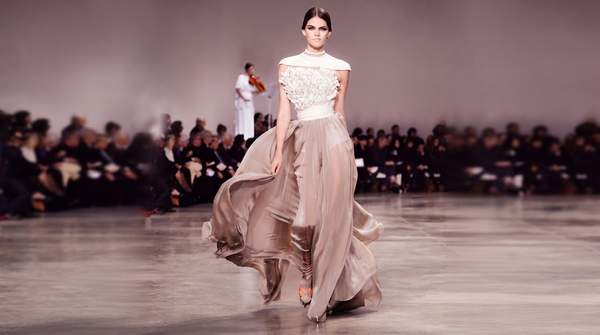
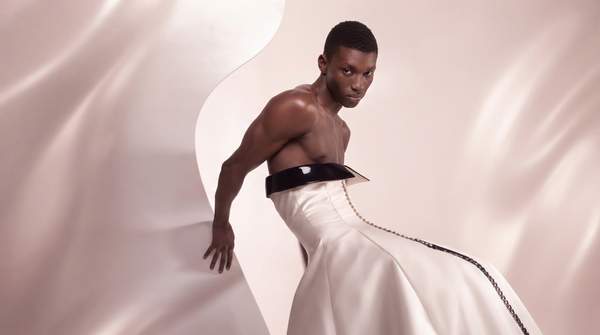
The most memorable shows of recent seasons, as Andrea Centeno observed for Ellie Belle, were defined not by color or trend but by "silhouettes that would not be held to code." Oversized blazers paired with flowing skirts, chains once coded masculine draped over silk tops, sneakers lifted onto platform bases with no loyalty to heritage. Her framing is the one I find most useful: "It's not about rejecting masculinity or femininity — it's about combining them."
That combination is what separates today's fluid tailoring from simple womenswear borrowing a man's jacket. The cuts themselves erode the traditional gender barriers of tailoring, moving away from strictly masculine or feminine ideals and opening a broader range of shapes and forms. The designers below each arrive at that openness by a different route, which is precisely why a single label like "genderless" flattens what is actually a rich, contested design conversation.
Pioneers of Androgynous Design
Any account of gender-fluid tailoring begins in Japan. As design scholar Jinghan Yu documents, a more genderless design sensibility entered the West from Japan by the 1990s, when Rei Kawakubo and Yohji Yamamoto brought new design concepts to the Paris Fashion Week runway. Their concept, as Yu puts it, transcended gender altogether: for them there was no difference between making clothing for a man or a woman — they might design for another gender entirely.
Crucially, the exchange ran in both directions. These designers added male elements to their womenswear, but female fashion elements entered their menswear too, so that in practice their design carried no gender difference at all. Yu calls this a genuine breakthrough in gender-fluid fashion, and I agree with the assessment: after the Japanese arrival in Paris, more Western designers began exploring gender fluidity, and non-binary clothing for both women and men gradually gained ground worldwide. Contemporary fluid tailoring is downstream of that intervention.
Architectural Minimalism: Rad Hourani's Universal Vision
Rad Hourani represents the most rigorous version of gender neutrality in fashion. As Fashion Index's Tirsa Parrish and Sabah Arshad note, Hourani was the first designer to show an entirely gender-neutral ready-to-wear collection at Paris Fashion Week, doing so in 2014. That date matters: it marks the moment neutrality moved from avant-garde statement to formal ready-to-wear presentation on fashion's most established stage.
His method is subtraction rather than fusion. Where Kawakubo and Yamamoto blended masculine and feminine elements, Hourani's minimalist, architectural aesthetic focuses on versatile silhouettes and sleek lines, creating pieces that transcend gender and cultural boundaries. The tailoring is characterized by clean lines and architectural forms that allow for universal wear — garments designed so that no body is the "wrong" body for them. It is the least decorative and arguably the most disciplined of the three approaches.
Inclusivity and Accessibility: Telfar's Genderless Collections
Telfar takes neutrality out of the atelier and into the culture. The brand champions accessibility, inclusivity, and universal designs at the heart of its identity, with genderless collections as a core commitment rather than a seasonal gesture. Its cult-favorite Shopping Bag — the accessory so widely adopted it became a cultural shorthand — demonstrates how a genderless design philosophy can scale into an instantly recognizable object.
What distinguishes Telfar from Hourani is emphasis. Hourani's neutrality is aesthetic and architectural; Telfar's is social and communal, built on the premise that universal design should be available to everyone rather than reserved for a fashion avant-garde. The brand's identity is so strongly linked to its genderless collections and iconic accessories that the two are difficult to separate — which is itself evidence of how central the philosophy has become to its success.
Worth mentioning alongside them is No Sesso, a label that emphasizes fluidity and self-expression and challenges societal norms with boundary-pushing collections. Its most cited gesture is bold experimentation with reconstruction — transforming men's tailored suits into the iconic One Titty Dress. The documented evidence on No Sesso's broader philosophy and techniques is thinner than for the designers above, so I treat it here as an example of deconstruction rather than a fully mapped fourth school.
Comparative Approaches to Gender-Fluid Tailoring
The table below categorizes each designer by stated philosophy and documented design elements, so you can identify at a glance which school a given runway look belongs to: minimalism, universalism, or the blending of traditional gender elements.
| Designer | Core Philosophy | Signature Silhouette/Garment | Key Technique |
|---|---|---|---|
| Rad Hourani | Entirely gender-neutral design; first entirely gender-neutral ready-to-wear collection at Paris Fashion Week, 2014 | Versatile, architectural silhouettes with sleek lines, suitable for any gender | Minimalist tailoring built on clean lines and architectural forms for universal wear |
| Telfar | Accessibility, inclusivity, and universal design at the heart of the brand | Genderless collections; the cult-favorite Shopping Bag as a universally adopted item | Universal, genderless design extended across collections and iconic accessories |
| Rei Kawakubo and Yohji Yamamoto | Design that transcends gender altogether — no difference between clothing for a man or a woman | Garments mixing male elements into womenswear and female elements into menswear, for any gender | Blending traditional gender elements in both directions, introduced to Paris runways by the 1990s |
Read side by side, the three rows reveal the central distinction: Hourani removes gendered cues, Telfar universalizes design for a broad community, and the Japanese pioneers fused previously separate gender vocabularies. No Sesso's reconstructed suits extend that third lineage toward outright deconstruction.
Common Threads: Visual Elements of Gender-Fluid Tailoring
Across these approaches, a shared visual vocabulary is emerging on the runway. The clearest documented pairing is the oversized blazer worn with a flowing skirt — a combination that borrows the structured shoulder of menswear and the movement of womenswear in a single look. Accessories follow the same logic: chains previously deemed masculine draped over silk tops, and footwear stripped of heritage coding.
Underneath the styling sits the deeper common thread: cuts that erode traditional gender barriers rather than merely swapping garments between wardrobes. This is what allows a broader range of shapes and forms in garments, and it is why fluid tailoring reads differently from a woman in a borrowed suit. The silhouette itself refuses the code. Note that architectural lines remain specific to Hourani's aesthetic in the documented evidence, and deconstructed suits to No Sesso's experimentation — neither is yet established as a general characteristic of the whole movement.
Navigating the Evolving Landscape of Gender-Fluid Fashion
When evaluating contemporary runway fashion, discerning consumers and industry observers should identify designers' core philosophies and specific design choices to understand their unique contributions to gender-fluid tailoring. The distinction is practical: a Hourani piece answers neutrality through architecture, a Telfar piece through universal accessibility, and a Kawakubo or Yamamoto garment through the deliberate fusion of gender vocabularies.
The measurable indicator to watch is the continued emergence of collections featuring oversized blazers, flowing skirts, architectural lines, and versatile silhouettes that intentionally blur traditional gender distinctions. Each new season that adds designers to these three schools — or defines a fourth — is the concrete evidence that this evolution is still accelerating rather than settling.
Sources
- The Runway Pieces That Blurred The Lines of Gender — Ellie Belle
- Static1
- Rise of Gender-Neutral Fashion — Fashionindex