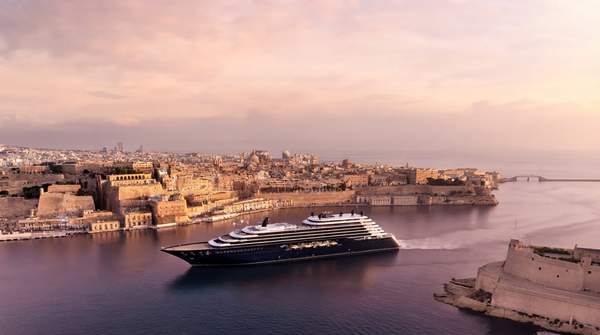
The best luxury cruise line for you depends less on thread counts and champagne brands than on a single question: what kind of traveler are you? Based on the published descriptions of the major lines, three distinct philosophies dominate high-end cruising. Viking Ocean Cruises designs its smaller ships and destination-focused itineraries around cultural immersion, with enrichment programming woven into the voyage itself. Ponant specializes in luxury expedition cruising to remote corners of the planet aboard small vessels. Regent Seven Seas Cruises takes the opposite approach, bundling nearly everything into one fare so the trip becomes a predictable, worry-free resort at sea.
Below, we match each philosophy to a traveler archetype, explain what each line actually delivers, and lay out the trade-offs you accept when you choose one style over another. This comparison draws on travel journalism and cruise advisory coverage rather than firsthand testing, and it is a selection of representative lines rather than an exhaustive survey. Pricing is deliberately excluded, since fares vary widely by itinerary, date, and suite selection, and family or multigenerational cruising falls outside this comparison.
Luxury Cruise Line Matchmaker: Find Your Perfect Voyage
Use this table as your starting point: find the row that describes how you want to spend your days, then read the corresponding section for the texture behind the categories. The mapping contrasts each line's dominant travel style, its itinerary focus, its signature onboard experience, and what "all-inclusive" actually means on board.
| Travel Style | Representative Cruise Line | Itinerary Focus | Signature Onboard Experience | All-Inclusive Scope |
|---|---|---|---|---|
| The Cultural Explorer | Viking Ocean Cruises | Destination-focused itineraries on smaller ships, with excursions such as after-hours museum visits and culinary tours | Enrichment activities: photography workshops, TED Talk screenings, cooking classes, musical performances and dance classes | Inclusions are narrower than Regent's; specialty dining and shore excursion fees may be additional |
| The Adventurer | Ponant | Expedition itineraries to polar regions, the Amazon, Papua New Guinea and beyond | French-inspired cuisine by Alain Ducasse, fine wines, and a stylish, intimate small-ship atmosphere | Not the most all-inclusive model; the value proposition is exploration and sustainability rather than bundled extras |
| The Relaxation Seeker | Regent Seven Seas Cruises | Culture, enrichment and cuisine for seasoned globetrotters | Elegant-casual dress and fine dining | Nearly everything covered: unlimited shore excursions, specialty dining, premium drinks, gratuities and Wi-Fi |
The Cultural Explorer: Deep Destination Immersion
If your ideal evening ashore is an exclusive, after-hours museum visit or a culinary tour through a market town, Viking Ocean Cruises is the line most consistently described as built for you. Viking's smaller ships—every cabin with a veranda—and destination-focused itineraries are what set it apart in cruise rankings, and its emphasis on cultural immersion shapes the onboard experience as much as the ports themselves.
The enrichment programming is the signature. According to the coverage in U.S. News travel rankings, Viking passengers can expect TED Talk screenings, cooking classes, stage performances, photography workshops, musical performances, and dance classes while sailing between destinations. The same source highlights shore excursions such as exclusive after-hours museum visits and culinary tours—experiences designed to deepen engagement with each stop rather than merely sample it.
That reputation has carried into formal recognition: travel advisor Angela Hughes, writing for Trips & Ships Luxury Travel, notes that Viking Ocean Cruises placed first among luxury lines in the 2026 U.S. News & World Report rankings, followed by Explora Journeys and Regent Seven Seas. This standing rests on the consistent description of Viking's destination-first identity across multiple travel publications. The trade-off, as we will see, is that Viking's fare covers less than some rivals—you may pay separately for specialty dining or particular shore excursions, so the "destination immersion" you purchase is intellectual rather than financial.
The Adventurer: Expedition and Remote Exploration
For the traveler whose luxury is access rather than amenities, Ponant blends French polish with genuine exploration. Travel coverage of the line describes unique itineraries to polar regions, the Amazon, Papua New Guinea, and beyond—places where the point of the voyage is the destination itself, not the chandelier count. This is cruising where the day's highlight might be a remote landing rather than a gala dinner.
Ponant's flagship illustrates the line's dual identity. Le Commandant Charcot is described in the same coverage as the world's first hybrid-electric polar exploration vessel powered by liquefied natural gas, an engineering statement that emphasizes sustainable travel without compromising comfort. On board, the luxury arrives in French-inspired cuisine by Alain Ducasse, fine wines, and a stylish, intimate atmosphere—refinement in service of exploration rather than as the main event.
That framing—eco-conscious adventure with a high-end twist—is how one luxury travel publication characterizes the line's ideal passenger. Adventurers should understand what they are choosing: a small-ship experience whose inclusions are far narrower than a resort-style line's, and whose itinerary calendar is built around remote, often extreme environments. What you give up in bundled amenities, you gain in places most ships simply cannot reach.
The Relaxation Seeker: All-Inclusive Resort at Sea
The Relaxation Seeker wants the opposite of logistical friction: one fare, one price, no onboard wallet anxiety. Regent Seven Seas Cruises is repeatedly described as the most all-inclusive ocean cruise line, and the substance behind that label is concrete. Hughes's advisory coverage lists the fare's contents: unlimited shore excursions, specialty dining, premium drinks, gratuities, and Wi-Fi. A Global Journeys comparison adds that Regent is known for unlimited free shore excursions, elegant-casual dress, and fine dining, and notes that some fares extend even to airfare.
The appeal is predictability. The Global Journeys comparison frames Regent's bundle as designed to minimize onboard spending decisions and deliver a predictable total trip cost—useful for travelers who would rather not audit every cappuccino and tasting menu against a running bill. The same source describes Regent's typical passenger as a seasoned globetrotter who appreciates culture, enrichment, and cuisine, so this is not a floating beach resort so much as a full-service voyage where the administrative work of luxury is done for you.
For most travelers, Hughes ranks Regent as the best overall luxury cruise line precisely because its fare includes the most. That comprehensiveness is the decision boundary: choose Regent when you value a fully covered, worry-free environment over the deeper port-immersion identity of Viking or the remote-access mission of Ponant.
Key Trade-offs in Luxury Cruising
The central tension in luxury cruising is between immersion and inclusion. Contrast the two most-cited models: Viking's destination-focused itineraries and enrichment-first atmosphere versus Regent's comprehensive all-inclusive bundle. As Global Journeys puts it, compared with Oceania and Viking, Regent typically offers a more comprehensive bundle designed to minimize onboard spend decisions. Inferred from these contrasting definitions, choosing Viking's cultural depth may mean accepting à-la-carte pricing for dining and excursions, while choosing Regent's predictability may mean a somewhat different emphasis on the destination experience itself.
A second trade-off separates expedition from amenity. Ponant's small, hybrid-electric vessels reach polar regions and the Amazon, and its Ducasse-helmed cuisine is genuinely luxurious—but intimacy and remote access come at the cost of the sprawling facilities, multiple specialty restaurants, and unlimited included touring that define larger all-inclusive lines. Adventure and comprehensive amenities are, in today's fleet architectures, largely alternative paths.
A third trade-off is breadth versus depth. A line like Viking ranks at the top of published luxury rankings while specializing in a destination-first philosophy, meaning its strength is a consistent identity rather than the widest possible range of voyage types. Travelers who want niche polar exploration, resort-style inclusion, and cultural depth within a single loyalty program will not find one line that does all three; the choice is which philosophy dominates your priorities. Pricing differences between these models are real but vary so widely by itinerary, date, and suite that no generalization would be honest.
Choosing Your Ideal Luxury Cruise
Select a luxury cruise line by first identifying your primary travel style preference: deep cultural immersion, rugged expedition, or comprehensive all-inclusive relaxation. If after-hours museum visits and cooking classes sound like the vacation itself, Viking's destination-focused itineraries and enrichment programming are your match. If your dream itinerary reads "Papua New Guinea" or "polar regions" and you want French cuisine waiting when you return to the ship, Ponant's expedition fleet is built for you. If a single fare covering unlimited excursions, specialty dining, premium drinks, gratuities, and Wi-Fi sounds like freedom rather than limitation, Regent Seven Seas delivers that model most completely.
The measurable indicator of success: the reader can confidently articulate which cruise line—Viking, Ponant, or Regent Seven Seas—best fits their desired travel experience based on itinerary focus and onboard amenities. Work through the table above, name your archetype, and your line follows from the evidence rather than the brochures.
Sources
- 8 Best Luxury Cruise Lines — TRAVEL
- Best Luxury Cruise Lines (2026): 14 Ranked by an Advisor — Trips & Ships Luxury Travel
- Top 10 best cruise liners for a luxury cruise — Luxury Travel Expert
- Compare Regent Seven Seas vs Viking Cruises — Global Journeys