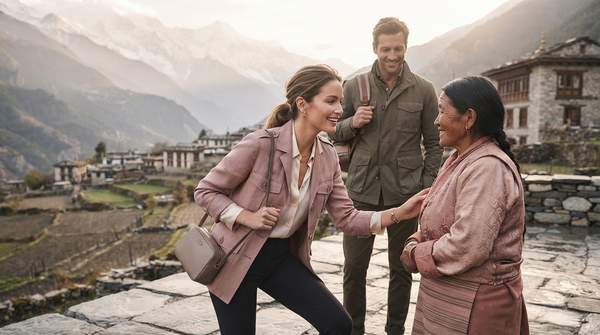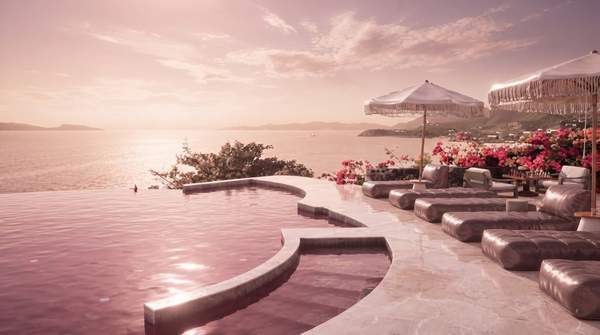
Luxury slow travel is a distinct philosophy, not a slower version of the same trip. It keeps everything discerning travelers expect—private access, expert curation, comfort—but, as one immersive-travel guide puts it, uses those resources "in service of immersion rather than speed." The difference lies in the planning decisions underneath the itinerary: how long you stay, where you sleep, what you build your days around, and what the trip is actually for.
Understanding Luxury Slow Travel: A New Paradigm
The clearest way to grasp the concept is through its central inversion: connection over collection. A rushed luxury itinerary, in the observation of one slow-travel guide, "usually fails in one predictable way"—it optimizes for the number of famous sights covered rather than the depth of any single experience. Slow travel flips that priority.
At the high end, this philosophy takes a particular form. Slow hospitality, as described by the Aaru Collective, reflects "a more conscious approach to luxury, where hotels prioritise connection, craftsmanship, community and a deeper sense of place." The most thoughtful properties, the collective argues, understand that true luxury is not about excess but about time, space, and meaningful experiences—environments where guests can slow down, reconnect with nature, and engage with local culture beyond the surface.
The demand is real. Citing YouGov research, travel writer Tim Roberts notes that 23% of leisure travelers surveyed worldwide travel for history and culture, and that more luxury travelers are seeking authentic experiences through cultural immersion—a demand fueling the slow tourism sector. What distinguishes the luxury version is that comfort and exclusivity are not abandoned; they are redirected.
Luxury Slow Travel vs. Conventional Luxury: A Planning Framework
The shift from conventional luxury tourism to luxury slow travel is best understood as a change in mindset across four planning dimensions—from collecting experiences to connecting with a place. Use the framework below to evaluate any proposed itinerary before you book.
| Planning dimension | Conventional luxury travel | Luxury slow travel |
|---|---|---|
| Pacing (itinerary density) | Rushing between many famous landmarks and sites, prioritizing breadth over depth—checking off a list of destinations | Extended stays in fewer places, with a leisurely pace that leaves room for spontaneous discoveries |
| Accommodation style | Not defined by the evidence in contrast terms | Hotels chosen for a sense of place, personalized service, and locally rooted experiences that foster connection with the surrounding culture |
| Activity focus | Volume of activities and sights | Depth over breadth: days built around access to local culture and community, not activity count |
| Goal of the trip | Collection of experiences and destinations | Genuine connection, cultural immersion, and quality over quantity |
One honest caveat: the evidence is explicit about what slow travel accommodation looks like—properties prioritizing craftsmanship, community, and a sense of place—but it does not spell out a contrasting profile of conventional luxury hotels. The framework's accommodation row should therefore be read as a positive definition of the slow approach rather than a documented criticism of the alternative.
Core Principles for Planning Your Luxury Slow Travel Journey
Moving from philosophy to practice, the principles are structural rather than aspirational. A good slow itinerary feels effortless when you are living it, but that ease comes from deliberate planning—"You don't need less planning," the immersive-journeys guide advises. "You need better planning, with enough restraint to let the destination breathe."
Stay long enough to notice something. The clearest benchmark is time. The guide's standard is staying long enough "for a destination to stop performing for you and start revealing itself." While the extreme version—digital nomads settling into one place for one to three months or longer, as Roberts describes—suits remote workers, the underlying principle scales down: fewer bases, longer in each.
Choose hotels with a sense of place. Select properties where connection, craftsmanship, and community are visible in how the hotel operates, and where staff can open doors to local culture rather than buffer you from it.
Build days around access, not activity volume. One well-placed introduction—to a local specialist, a craftsperson, a neighborhood—carries more weight than a full schedule of sights. The Aaru Collective describes this as a high-touch human approach: hand-crafted itineraries built on local expertise, creating space for "genuine connection and a natural rhythm that allows you to truly understand a destination."
Avoid the checklist approach. Under-the-radar destinations and longer stays, the collective argues, are what make room for that rhythm to emerge in the first place.
The Profound Benefits of Embracing Slow Travel
Why accept fewer stops when the budget allows for more? Because the returns compound differently. When you rush, Roberts observes, "you hardly get to have a glimpse of the local cultures, let alone experience them in a meaningful way." Depth is simply unavailable at speed, regardless of how much the trip costs.
The benefits cluster around three outcomes. First, deeper cultural immersion: time in one place lets a destination reveal itself rather than perform for you, opening the way to authentic experiences that luxury travelers increasingly say they want. Second, genuine connection—to place, to people, and to the natural environment, which slow hospitality is specifically designed to foster. Third, a more restful experience: a leisurely pace with room for spontaneity replaces the fatigue of constant movement, so the trip restores rather than depletes.
There is also a subtler reward. The most thoughtful properties frame true luxury as time, space, and meaningful experiences rather than excess—and a traveler who plans this way internalizes that same standard. The trip becomes something you inhabit rather than consume.
Embrace the Journey: Making the Shift to Luxury Slow Travel
To achieve a more meaningful and enriching travel experience, discerning luxury travelers should consciously shift their planning mindset from "collecting" destinations to "connecting" with a single place. In practice, that means choosing one base over three, a hotel with genuine local roots over a familiar flagship, and a few well-placed introductions over a packed schedule.
The measurable indicator of success is observable on the trip itself: the traveler observes a reduction in travel fatigue and an increase in memorable, authentic interactions with local culture and people. If your next journey leaves you rested, rooted, and full of encounters you could not have scheduled, the shift has worked.
Sources
- What Is Slow Travel: A Guide to Immersive Journeys - Northern Spain Travel — Northern Spain Travel -
- \r\n \n What Is Slow Travel? A Guide to Conscious, Meaningful Journeys\n \r\n — Aarucollective
- Why Slow Travel is the Best Travel — Storylines