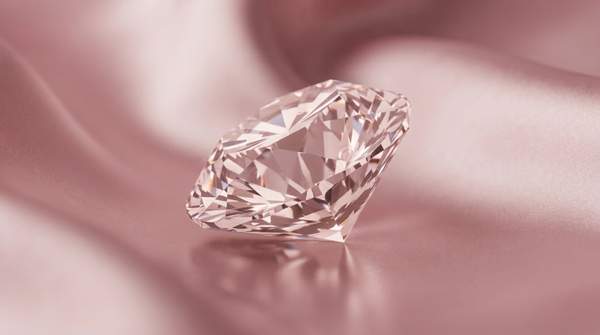
I'll say it plainly: a gemstone's sparkle is not an accident of nature. It is an engineering decision. Brilliant, step, and mixed cuts are three distinct answers to the same optical problem — how to bend, trap, and return light — and once you understand the mechanics, you will never look at a gem the same way again. Roughly nine out of ten stones cut today use the brilliant style, according to gem-cutting references, yet step and mixed cuts persist because they prioritize entirely different virtues. Here is how each design works, and why the trade-offs matter.
Understanding Gemstone Sparkle: Brilliance, Fire, and Scintillation
What we casually call "sparkle" is actually three separate optical events, and conflating them is the first mistake most people make. A CaratX guide to gemstone cuts defines them cleanly: brilliance is the reflection of white light, fire is the dispersion of light into spectral colors, and scintillation is the sparkle seen when the stone moves. Each is produced by a different geometric mechanism, which is why a cut that maximizes one may deliberately sacrifice another.
The distinction is not amateur lore, either. Researchers at the University of Arizona have published a formal evaluation of brilliance, fire, and scintillation in round brilliant gemstones, using illumination-effect maps to identify which stones perform best — evidence that these qualities are measurable engineering targets, not just romantic adjectives. One practical nuance from jewelers' observations: shapes with many small facets tend to show more colored fire, while shapes with larger crown facets tend toward white-light flash.
The Science of Light Interaction: Total Internal Reflection and Critical Angle
The whole game happens inside the stone. When light passes from a dense medium into air at a steep enough angle of incidence, it is totally reflected back into the denser medium instead of escaping — the phenomenon of total internal reflection, which gemology educator Robert James of the International School of Gemology calls fundamental to diamond brilliance. The threshold is the critical angle: for diamond, approximately 24.4 degrees.
This is where cut becomes engineering. As the geology reference at LibreTexts explains, light striking a facet at an angle smaller than the critical angle is refracted out of the stone — lost. Every gem material has its own critical angle, determined by its refractive index, so the cut must be designed for the stone at hand. A gemology journal published by Gem-A tabulates these values across materials: rutile at 21°20', diamond at 24°26', corundum at 33°57', quartz at 40°15'. A pavilion cut too shallow or too deep lets light bleed out the bottom, making the stone appear washed out or dark.
How Each Cut Style Manipulates Light
Brilliant Cuts: Maximizing White Light Return and Fire
The brilliant cut, developed through centuries of experimentation since Peruzzi's seventeenth-century breakthrough, is pure light optimization. Its triangular and kite-shaped facets radiate outward from the center, and the standard round brilliant carries exactly 58 facets — 33 on the crown, 25 on the pavilion — angled so that nearly all entering light bounces internally and exits back through the top. The Gem-A analysis specifies the design condition precisely: crown facet angles must be such that internally reflected light strikes facets below the critical angle and emerges parallel to light entering the table. The result is maximum brilliance, fire, and scintillation simultaneously.
Step Cuts: The Hall of Mirrors
Step cuts reject that philosophy entirely. With fewer, larger facets arranged in parallel bands like stairs, the emerald cut — the most famous example, with its facets organized in three distinct sections — shows less fire but offers what I consider something more sophisticated: a window into the stone's interior. The effect is a "hall of mirrors," strong on luster and depth but returning less white light than a round brilliant. This is why step cuts are reserved for rough with outstanding clarity and color: inclusions become more visible, and hue becomes the spectacle. As one gem guide puts it, step cuts may not sparkle as much, but they offer a unique, elegant look.
Mixed Cuts: The Hybrid Strategy
Mixed cuts split the difference literally, combining a brilliant-cut crown with a step-cut pavilion, or vice versa. The International Gem Society describes them as fusing techniques for unique optical effects, balancing sparkle against clarity and color display. There is even research suggesting that reversing the traditional arrangement — brilliant pavilion, modified crown — can produce greater brilliance. The design is versatile precisely because its two halves pursue different goals; its success depends on how thoughtfully those styles are integrated for the specific stone.
Gemstone Cut Comparison: Design, Structure, and Optical Effects
Use this table as a quick reference: it contrasts each style's design goal, facet structure, and the optical outcome that structure produces.
| Cut Style | Primary Design Goal | Typical Facet Structure | Dominant Optical Effect |
|---|---|---|---|
| Brilliant Cut | Maximize light return, sparkle, brilliance, and fire, achieved through precise facet angles and proportions | Many triangular and kite-shaped facets radiating from the center; standard round brilliant has 58 facets (33 crown, 25 pavilion) | High white-light brilliance and strong fire, with significant scintillation — these effects combine to create intense sparkle |
| Step Cut | Showcase the stone's clarity and natural color, prioritizing elegance and a clear view into the stone over maximum sparkle | Fewer, larger, rectangular facets arranged in parallel steps resembling stairs; the pavilion is carved with laps, burs, and jigs, then polished | A "hall of mirrors" effect emphasizing depth and transparency; may not sparkle as much as other cuts but offers a unique, elegant look |
| Mixed Cut | Combine the advantages of brilliant and step cuts, balancing sparkle with clarity and color display | A brilliant-cut crown paired with a step-cut pavilion, or the reverse; studies suggest reversing the traditional arrangement can produce even greater brilliance | A hybrid profile blending white-light return with color and clarity display, offering significant advantages by blending optical properties |
The table reveals the essential trade-off: brilliant cuts spend their geometry on returned light, step cuts spend it on transparency, and mixed cuts divide the budget between the two. None is objectively superior — each represents a deliberate allocation of the same optical resource.
Evaluating Gemstones: Beyond Simple Sparkle
When evaluating a gemstone, understand that its cut is a deliberate engineering choice designed to optimize specific optical properties. Choose a cut that aligns with the desired visual emphasis, whether it's intense sparkle, clarity, or color. Two stones of identical material can look entirely different because their cutters answered the light problem differently — one trapping rays for maximum return, one opening windows into the crystal.
A practical test endorsed by gem guides: view the stone under multiple lighting conditions. A stone that performs well under both a spotlight and diffuse daylight is genuinely well-cut; one condition alone is not enough. The observable signal is the distinct visual performance of a gemstone, specifically the balance of white light return (brilliance), spectral colors (fire), and flashes of light and dark (scintillation), which will vary predictably based on its cut style. Tilt a brilliant cut and watch colors flash; tilt a step cut and watch mirrors deepen. That predictable difference is the cut doing exactly what it was engineered to do.
Sources
- Overview of Gem Cutting Styles - International Gem Society
- The Ultimate Guide to Gemstone Cuts: From Brillian... | Blog — CaratX
- Evaluation of brilliance, fire, and scintillation in round brilliant gemstones — University of Arizona
- 7.7: Brilliance — Geosciences LibreTexts
- GEM A
- How To Choose The Right Gemstone Cut — Gesner Estate Jewelry