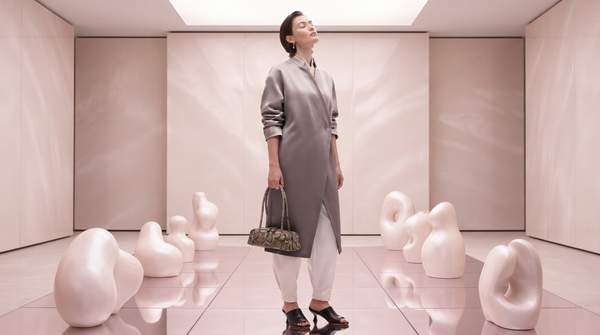
Quiet luxury is not the aesthetic your feed discovered last season. It is a philosophy of dressing—understated, materially rich, and pointedly logo-free—that traces its lineage to the late 18th and early 19th centuries, when newly moneyed capitalist elites in Europe and America deliberately rejected the ostentatious, courtly styles of monarchy and church. What social media has labeled a trend is, in my view, the latest expression of a very old instinct: the secure don't shout. Understanding that lineage is the difference between buying a look and recognizing a principle.
The Enduring Appeal of Quiet Luxury
Here is the essential distinction I want you to hold onto: quiet luxury is a definition, not a mood board. The term describes the style of those whose wealth is inherited and secure across at least two generations—people whose standing, as the record puts it, is "secure from birth and rarely questioned," and who therefore have a lower need for status signaling. They favor quiet brands because they can afford to.
That is why the current moment feels both new and familiar. As Francesca Contino observes in her analysis for Luxiders, neutral tones, tailored silhouettes, cashmere, and logo-free elegance have "once again" taken over social media feeds—once a refinement reserved for connoisseurs of craftsmanship, now one of the internet's most aspirational aesthetics. The word "again" is doing real work there. The appeal endures because the underlying logic—quality over display—never actually left.
Historical Roots: From 19th-Century Discretion to 20th-Century Minimalism
The origin story matters, so let me give it to you plainly. As power shifted away from monarchical and ecclesiastical institutions during the late 18th and early 19th centuries, wealthy elites adopted understated clothing, architecture, and interiors specifically to differentiate themselves from the ostentatious styles of the courts they were replacing. Discretion was the original status marker of the self-made and their heirs.
That thread runs straight through the 20th century. The minimalist movements of the 1990s—clean lines, neutral palettes, an almost aggressive refusal of ornament—carried the same DNA forward, translating 19th-century discretion into a modern design language. When today's commentators describe quiet luxury as "rooted in the concept of understated elegance," they are describing a continuum, not an invention. The philosophy has simply been re-dressed for each era, which is precisely what makes it durable rather than fashionable.
Core Aesthetic Principles of Quiet Luxury
Strip away the styling and four principles remain. First, materials: quiet luxury is defined by rare, expensive fibers whose cost reflects quality, craftsmanship, and the effort of production—not a label. Second, craftsmanship: impeccable tailoring and construction that reward close inspection rather than distant recognition. Third, timelessness: neutral colors—black, white, beige, navy, grey—and silhouettes chosen to transcend seasonal fads, so a piece remains stylish year after year. Fourth, restraint in branding: no loud logos, no ostentatious displays.
The theory, as one industry account frames it, is about "wearing pieces that highlight quality, craftsmanship, and timelessness"—dressing in a way that whispers wealth through luxurious materials and impeccable tailoring. I would add a fifth, quieter principle that follows from the others: the value must be legible only to those who know how to look. A cashmere sweater and a logo-free coat speak to the discerning and say nothing to everyone else. That is not an accident. It is the point.
Quiet Luxury vs. Logo-Driven Luxury: A Comparative Framework
Now the practical tool. The clearest way to distinguish the two philosophies is to place them side by side across the attributes that actually define a garment or brand. This framework lets you assess an item on tangible design characteristics rather than price tag or name recognition.
| Aesthetic Principle | Quiet Luxury | Logo-Driven Luxury |
|---|---|---|
| Branding & Logos | Subtle or absent branding; discretion is deliberate, and the absence of developed brand iconography is itself a defining trait. | Conspicuous, prominent logos serving as the primary identifier; visually distinctive marks are engineered to capture attention and drive brand recall. |
| Material & Craftsmanship | Rare, refined fibers valued for quality and the effort of production; craftsmanship is the visible argument for the price. | Quality may be present, but brand identity and spectacle can overshadow the subtle appreciation of materials. |
| Design Philosophy & Timelessness | Timeless silhouettes and neutral tones chosen to outlast fleeting trends. | Often aligned with flashy, trend-driven design and higher volumes—a chase that can dilute a brand's positioning. |
| Source of Value | Inherent quality and understated elegance; value is perceived through discernment, signaling "stealth wealth." | Brand recognition and the perceived prestige of the name; value is communicated through visible identifiers. |
| Consumer Motivation | Confidence and security—signaling sophistication through subtlety and experience over item. | Overt status signaling; the logo does the talking so the wearer doesn't have to. |
Read the table one way and you get a diagnostic: if the first thing you notice about a garment is its logo, it belongs to the right-hand column. Read it the other way and you get a warning. As Contino notes, there is a glaring contradiction in the current moment—can an aesthetic rooted in quality, longevity, and restraint survive inside the fast-paced culture of social media and fast fashion? A logo-free garment made cheaply for a trend cycle is not quiet luxury. It is loud luxury wearing a costume.
The Modern Interpretation and Lasting Value
The contemporary market is split along exactly this fault line. Writing on luxury branding, Andrea Maso of Bliss describes a rift between consumers who want extrinsic spectacle—what he calls monumental luxury—and those seeking something intrinsic, "almost invisible to the uninitiated." His diagnosis of the industry's troubles is pointed: there is no crisis of luxury in absolute terms, but there is a crisis of brands that diluted their positioning by chasing volumes luxury branding cannot sustain. That is the logo-driven column of the table, failing on its own terms.
Quiet luxury's staying power comes from the fact that its principles are structural, not stylistic. Materials, craftsmanship, and timelessness are properties you can verify in the garment itself; a logo is a property you can only verify in the market. The Row, Brunello Cucinelli, Loro Piana, and Bottega Veneta are frequently cited for showing wealth through refinement rather than overt branding—but the framework matters more than any brand list, because the framework survives the trend cycle and the brand list does not.
Embracing Enduring Style: A Conscious Choice
Readers can confidently identify and choose fashion that embodies the enduring principles of quiet luxury by focusing on material quality, craftsmanship, and timeless design over overt branding. The test is simple and repeatable: before the label, ask what the fabric is, how it is constructed, and whether the silhouette will read as intentional in five years. The measurable indicator of success is the reader's ability to articulate the core differences between quiet luxury and logo-driven luxury when evaluating fashion items or trends. If you can explain why a logo-free cashmere coat qualifies and a logo-splashed trend piece does not—regardless of either price—you have the framework, and no feed can sell you its imitation.
Sources
- Quiet luxury - Wikipedia — EN
- What is Quiet Luxury Fashion? The Rise of Discreet Elegance — POMP MMXIX
- Quiet Luxury: The Art of Understated Wealth — Insights
- The Rise Of Quiet Luxury: Style, Status, And Some Contradictions — Sustainable Fashion - Eco Design - Healthy Lifestyle - Luxiders Magazine
- Sumissura
- When Less is More: The Curious Case of Quiet Luxury - Berkeley Technology Law Journal
- Mastering Luxury Branding: What Sets High-End Brands Apart — Vivaldi Group
- Neuroscientific Analysis of Logo Design: Implications for Luxury Brand Marketing - PMC
- Luxury Brands: the most emblematic success stories — Bliss