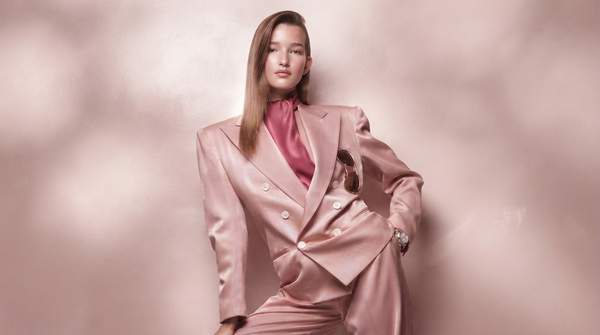
The era luxury fashion is reviving right now is the 1980s — specifically its power dressing. After seasons of quiet luxury and muted minimalism, spring 2026 collections are running it back to bold, structured, shoulder-heavy dressing, a shift Marie Claire's fashion editor Halie LeSavage describes as designers "tap[ping] into the original power dressing mode." I'd argue this is the most legible trend revival in years, because the 1980s original was never just an aesthetic. It was armor with a job to do, and that job is back on the cultural agenda.
1980s Power Dressing: Original Aesthetics and Influencers
Start with why the look existed at all. As the fashion newsletter Wardrobe HQ frames it, power dressing "wasn't born from an aesthetic mood board. It was born from necessity." Women moving into managerial and executive roles in a corporate world "built entirely by men, for men" borrowed the suit — men's visual language for power — restructured it, padded the shoulders out, and walked into boardrooms with a clear signal: I am serious. Treat me accordingly.
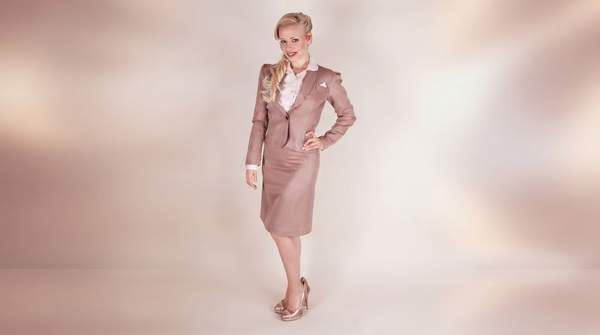
That origin explains the era's defining aesthetic: bold, structured silhouettes, exaggerated shoulders, and sharp tailoring designed to communicate authority rather than decorate the body. The look was assertive by construction. A padded shoulder takes up space; a structured jacket insists on being taken seriously.
The designers who defined the moment worked at the top of the market. Karl Lagerfeld, hired by Chanel to revive the house, was given, as Amy de la Haye and Andrew Tucker write in Costume and Fashion: A Concise History, a brief "to increase sales by attracting a new, youthful market, while retaining the loyalty of Chanel's traditional customers" — exploiting Chanel's signature designs, sometimes as homage and sometimes as merciless parody. Within a year, Chanel was back at the forefront of fashion. In his first year he made a leather jacket with the signature Chanel gold buttons and square breast pockets; later in the decade, a black dress with cream trim in a thoroughly modern silhouette.
Christian Lacroix, who had opened his couture house in 1975, took the opposite route to the same decade's excess: extravagant, over-the-top clothing for a wealthy clientele, inspired by historical dress and craftsmanship, with big skirts and balloon sleeves as signatures of the 1980s silhouette, and a ready-to-wear line launched in 1988. Between them, Lagerfeld's sharpened tailoring and Lacroix's volume gave the decade both poles of its power vocabulary.
Contemporary Luxury Reinterpretation of 1980s Power Dressing
What makes the current revival distinct from costume nostalgia is the context it lands in. LeSavage's reporting for Marie Claire connects the spring 2026 '80s turn directly to the present: debates over where women belong are pervasive on social media and in government, and when designers tap the original power dressing mode, "it reads like a call to bring back the old armor" — or to take on an '80s air of optimism that women can still overtake old boys' clubs, if they want to. In these '80s-coded clothes, she writes, there's "an air of purpose and striving akin to a call-to-action."
The mechanism is the classic fashion cycle, accelerated. Wardrobe HQ's analysis traces the pendulum swing: after seasons of minimalism and muted palettes, the landscape is embracing bold self-expression and unapologetic indulgence, with maximalism taking forms from '80s-inspired power glam to styles that demand attention. Quiet luxury, on this reading, was a retreat — dressing that didn't ask for anything. The revival is the counter-move, and social media's amplification of the underlying cultural debates is what gives a decades-old silhouette new urgency rather than mere retro charm.
Notably, the reinterpretation is not literal reproduction. The designers working with 1980s codes today are adapting the aesthetic for modern women — a sophisticated reference rather than a museum piece. LeSavage's reporting even flags the open questions the revival raises: whether twists on hoop skirts signal taking up space or a regression to outdated body standards, and whether a Miu Miu apron reads as empowerment or domestic ideal. Her conclusion, though, is the one that matters for the trend's staying power: "the original modes of power dressing haven't run out of batteries just yet."
1980s Power Dressing: Originality vs. Modern Reinterpretation
To see the through-line at a glance, here is the era broken down across its original form and its current luxury revival. Read it as the anatomy of one revival: what defined the 1980s look, who authored it, and what today's version keeps and changes.
| Dimension | Original 1980s Form | Modern Luxury Reinterpretation (Spring 2026) |
|---|---|---|
| Defining Aesthetic | Bold, structured silhouettes: the men's suit borrowed, restructured and shoulder-padded to signal authority; plus Lacroix's big skirts and balloon sleeves. | '80s-coded power glam within a broader maximalist turn — bold self-expression and structured, attention-demanding dressing after seasons of quiet luxury. |
| Key Original Designers | Karl Lagerfeld for Chanel (leather jacket with gold buttons and square breast pockets; black dress with cream trim) and Christian Lacroix (extravagant couture, ready-to-wear from 1988). | Designers across spring 2026 luxury collections toying with 1980s codes — including Miu Miu's apron styling — rather than a single house owning the revival. |
| Cultural Function | Necessity: women entering managerial and executive roles dressing to communicate competence, authority and respect in a male-built corporate world. | Response: amid pervasive public debates over where women belong, the mode reads as "a call to bring back the old armor" and an air of purpose and striving. |
The comparison shows the revival is structural, not decorative. The shoulders, the tailoring, the volume — the same vocabulary — but pointed at a new cultural argument.
Spotting Future Fashion Revivals
To anticipate future luxury trends, monitor upcoming collections for explicit references to past decades' aesthetics and silhouettes, particularly those that align with current cultural shifts — that is the practical lesson of this cycle. The 1980s returned not because twenty years passed but because the debate it answered returned.
The measurable indicator: the appearance of specific historical aesthetic elements — exaggerated shoulders, signature prints, defined period silhouettes — across multiple luxury brand runway shows or collection lookbooks in a single season. That is exactly what marks this revival: structured, shoulder-driven '80s codes appearing across spring 2026 collections, with LeSavage reporting that the set of designers toying with them suggests the mode still has charge. Watch the next round of shows for whether the padded shoulder spreads or recedes; that, not the calendar, will tell you whether power dressing is a season or a cycle.
Sources
- Spring 2026 Fashion Is Running It Back to the '80s — Marie Claire
- The 80s Fashion Revival of 2026 — WardrobeHQ
- 1980-1989 — Fashionhistory