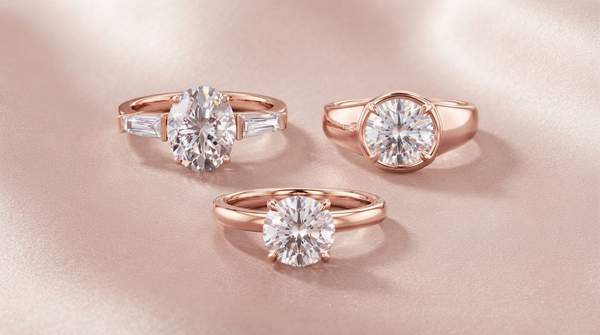
Here is the honest answer most jewelry guides dance around: there is no single "best" setting, only a trade-off you choose deliberately. Prongs let the most light into a stone and deliver maximum brilliance, but they snag and wear. Bezels encircle the stone in metal and offer the highest protection, at some cost to sparkle. Channel settings lock rows of stones between parallel walls for a smooth, durable surface. Pavé blankets a piece in tiny stones for a continuous field of sparkle, with less security for each individual gem. I'll walk through the mechanics of each, then give you a comparison framework to match a setting to your actual life.
Prong Setting: Maximizing Sparkle
A prong setting holds the gemstone with several small metal claws, leaving most of the stone exposed to the air. That exposure is the entire point. Because the metal covers so little of the gem, light enters from nearly every angle, and the open back even allows ultrasonic cleaning. Jewelers describe prongs as delivering maximum light exposure and excellent brilliance, which is why they dominate engagement rings, solitaires, and stud earrings.
But the same minimal metal that creates the sparkle creates the vulnerability. If a prong breaks, the stone can dislodge. Prongs catch on clothing and hair, and they wear down over years of wear, eventually needing re-tipping by a jeweler. The practical consequence is simple: a prong-set piece rewards you with the most fire a stone can offer, but it asks for periodic inspection in return. If your piece won't see heavy physical impact and brilliance is the priority, prongs are hard to beat.
Bezel Setting: The Ultimate in Protection
The bezel takes the opposite approach. A continuous metal rim completely encircles the stone, holding it securely from all sides. This is the setting I'd point most everyday wearers toward, because the design itself does the protective work: the rim shields the stone's vulnerable edges from knocks and abrasion, minimizing the risk of chipping or loss.
The trade-off is light. That encircling rim blocks some of the light that would otherwise enter the gem, so a bezel-set stone can read as slightly more subdued than the same stone in prongs. What you get in exchange is exceptional security, a clean modern aesthetic, and a surface with nothing to snag. Jewelers consistently recommend bezels for everyday-wear rings, men's jewelry, and colored gemstones, and for active individuals who need a low-profile setting that prevents damage. If you work with your hands, wear gloves, or simply refuse to baby your jewelry, the bezel is your setting.
Channel Setting: Smooth Lines and Secure Rows
Channel setting is built for multiple stones rather than a single hero gem. Small stones sit in a row between two parallel metal walls, with no prongs exposed at all. The result is a smooth, continuous surface with excellent durability — one reason channel work appears so often in wedding bands, eternity rings, and bracelet designs.
Because the metal walls protect the stones' edges along the entire row, channel settings score well on both security and snag-free wear. The compromise is flexibility: jewelers note that channel-set pieces are difficult to resize, since altering the band disturbs the channel itself. And while the row sparkles, each individual stone receives less light exposure than a prong-set gem. Channel is the right choice when you want a sleek, uninterrupted line of stones that can survive daily wear — think anniversary bands and tennis-style pieces — rather than a single stone's maximum fire.
Pavé Setting: A Continuous Surface of Sparkle
Pavé — from the French for "paved" — uses numerous small gemstones placed closely together, held by tiny beads of metal raised from the surface. The effect is a continuous field of sparkle rather than one focal point. It's the technique behind glittering halos and fully paved bands, and it's the most labor-intensive of the four: jewelers note that pavé requires a specialist setter, and the per-stone setting cost runs higher than prong or bezel work.
The trade-off is per-stone security. Each tiny stone is held by only a small amount of metal, so pavé scores lower on individual stone security than bezel or channel. If one bead wears or a stone is lost, replacement requires a specialist rather than a quick repair. Pavé also resists resizing, since the paved surface can't simply be cut and rejoined. Choose pavé when the goal is a surface of light — a halo around a center stone, an eternity band — and when you accept a higher-maintenance piece in exchange for that effect.
Gemstone Setting Comparison: Brilliance, Security, and Lifestyle
Here is the framework I promised, drawn from jewelers' own comparative guidance. Read each row as a single trade-off: what the setting gives you in one column, it takes from another.
| Setting | Brilliance (Light Exposure) | Security & Durability | Maintenance & Repair | Best For (Lifestyle/Use Case) |
|---|---|---|---|---|
| Prong | Maximum — least metal coverage, most light entering the stone | Moderate — stone can dislodge if a prong breaks; prongs snag and wear down | Periodic inspection and re-tipping over the years; easy to clean and resize | Solitaires, engagement rings, studs — pieces where brilliance is the priority and impact is unlikely |
| Bezel | Reduced — the encircling rim blocks some light, giving a more subdued sparkle | Highest — the metal rim protects the stone's edges and minimizes chipping or loss | Low maintenance; fully snag-free | Everyday wear, active lifestyles, men's jewelry, colored gemstones |
| Channel | Moderate — a continuous row of sparkle, but each stone gets less light than in prongs | Strong — parallel walls protect stone edges; no exposed prongs to snag | Durable, but difficult to resize | Wedding bands, eternity rings, bracelets — smooth, secure rows for daily wear |
| Pavé | High overall — a continuous surface of sparkle from many small stones | Lower per stone — each gem held by small metal beads | Most demanding — specialist setter required; higher per-stone cost; resizing is problematic | Halos, paved bands — maximum surface glitter in a special piece |
The pattern across the table is consistent: brilliance and security sit at opposite ends of the same lever. The more metal you remove to let light in, the less metal you have holding the stone. Prong and bezel are the two pure extremes; channel and pavé are sophisticated middle positions that trade individual stone performance for a collective effect.
Making Your Choice: Aligning Settings with Your Lifestyle
Choose a gemstone setting based on a balanced consideration of desired brilliance, required security, and practical maintenance for your lifestyle — in that order of honesty with yourself. If you want one stone to blaze and you'll treat the piece with care, prongs are the classic answer. If you want to wear the ring to the gym, the garden, and everything in between, a bezel's subdued sparkle is a fair price for peace of mind. If you want a row of stones that slides under a glove, choose channel. If you want a surface of light for a special piece, pavé — with a specialist's maintenance plan behind it.
And don't feel forced into one camp: jewelers note that most successful collections mix settings, matching each technique to the design and price point. A bezel-set center stone with a pavé halo is a perfectly coherent choice. The measurable indicator that you've chosen well is simple: the chosen jewelry piece effectively balances aesthetic appeal with durability and ease of wear for its intended use. If your ring still looks right and sits secure after six months of your real routine — not the routine you aspirationally imagine — the setting was the right one.
Sources
- Stone Setting Techniques Explained: Prong vs Bezel vs Pavé vs Channel — LY Jewelry
- Guide to Stone Setting Techniques — Helmut the Jeweler
- 8 Types of Jewelry Stone Settings: A Complete Guide — Flashforge-enterprise